
Blog

Fire marshal equipment: hi-vis, kit and identification standards

by
Mark McShane
May 10, 2026
8 min read

Table of Contents

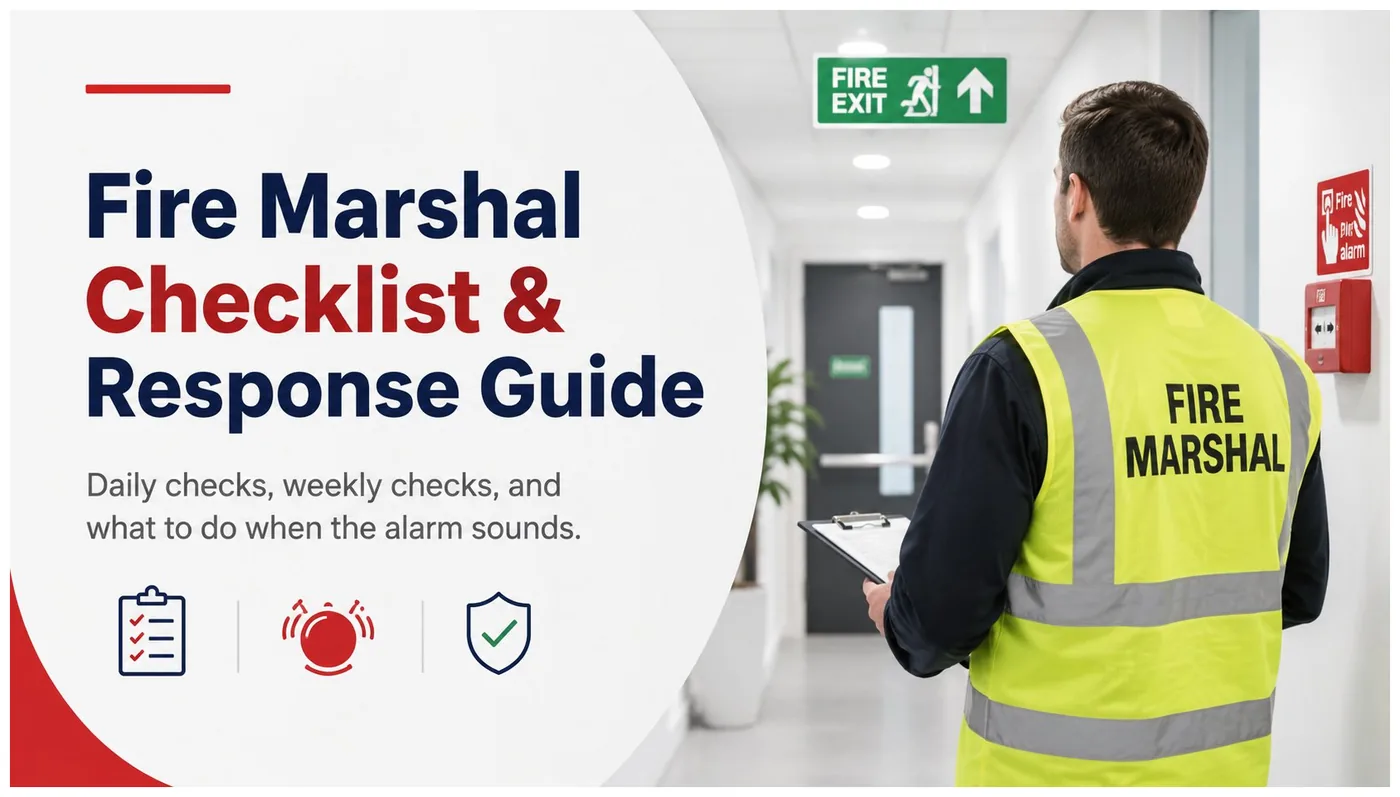
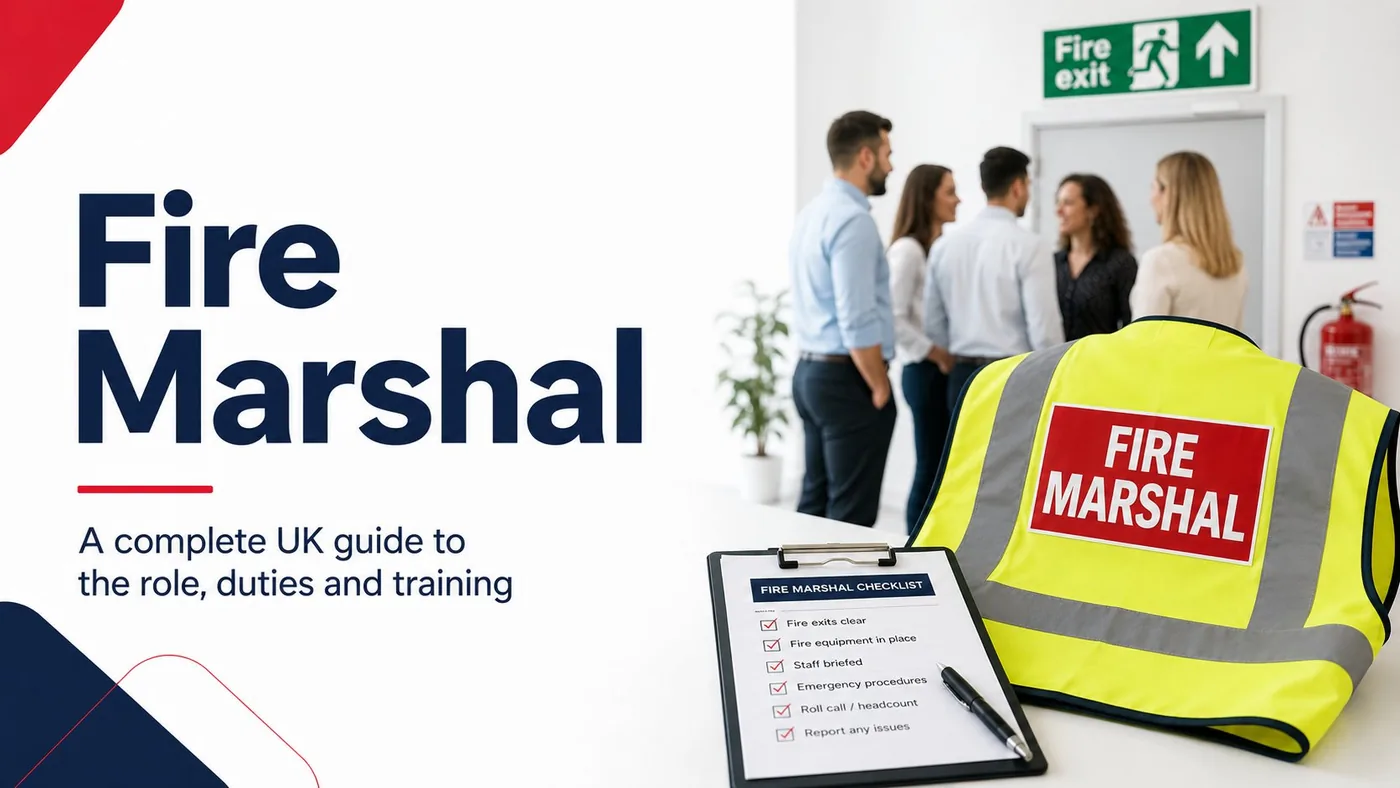
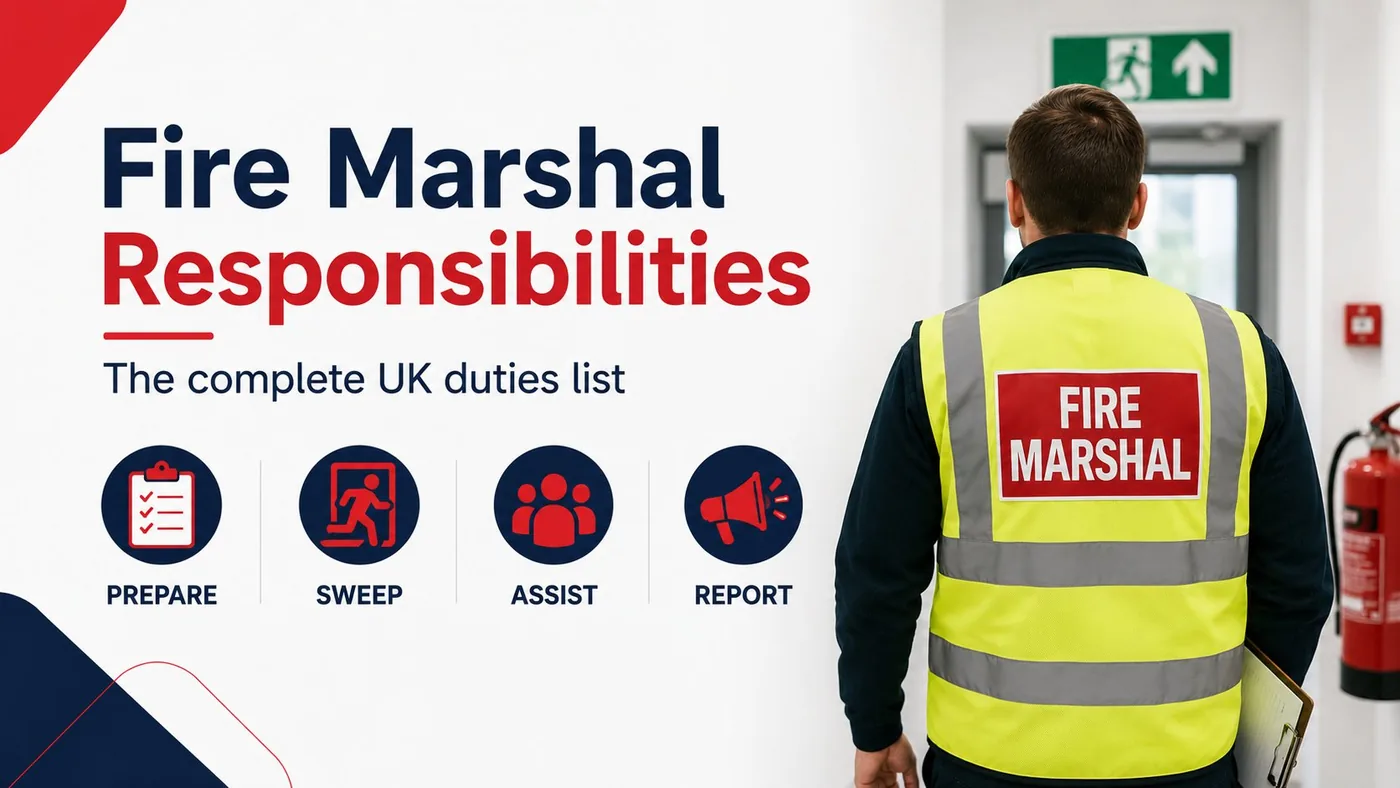
The single most important piece of equipment a fire marshal needs is a high-visibility vest or jacket they can put on quickly when an alarm sounds. Everything else is secondary. Identification matters more than people realise — during an actual evacuation, the marshal in normal office clothes is invisible to occupants who are trying to find someone in authority. A bright vest with "Fire Marshal" or "Fire Warden" printed clearly across the back solves the problem in two seconds.

Beyond the vest, marshals typically have a small set of practical items that make the sweep and roll call work properly. We'll go through the standards behind the hi-vis, the colour conventions used in UK workplaces, and the full kit a marshal should have to hand.

The EN ISO 20471 standard explained

The current UK and European standard for high-visibility clothing is EN ISO 20471:2013 (with the 2016 amendment). It replaced the older EN 471 standard, which you'll still see on some older stock and some second-hand or bargain-bin garments — both standards work to the same principles, so older items aren't dangerous, but new purchases should conform to EN ISO 20471.

The standard defines three classes based on the area of fluorescent and reflective material:

  • Class 1 — minimum coverage. Light-duty applications where some visibility is needed but the wearer is mostly in low-traffic environments.
  • Class 2 — moderate coverage. The standard for most workplace fire marshal vests. Includes body bands and shoulder braces.
  • Class 3 — maximum coverage. Designed for road and rail workers, emergency services, and other high-hazard environments.

For fire marshal duties in a normal workplace, Class 2 is the right choice. It's visible enough for indoor evacuation, doesn't go further than the role needs, and is what most pre-printed "Fire Marshal" vests are built to.

Look for the standard number printed inside the garment, usually on the same label as care instructions and size. If it isn't there, the vest hasn't been tested to the standard regardless of what the seller claims.

What colour should a fire marshal vest be?

There's no UK statutory requirement on fire marshal vest colour. The Fire Safety Order doesn't mention vests. The Health and Safety (Safety Signs and Signals) Regulations 1996 don't specify a colour for fire safety personnel. You can legally use any visible colour you like.

That said, conventions exist. The most common choices in UK workplaces are:

  • Yellow — by far the most widespread. High visibility in most lighting conditions, neutral associations, easy to source.
  • Orange — also very common, often deliberately chosen for fire marshals to differentiate them from other hi-vis wearers (warehouse staff, contractors) who tend to wear yellow.
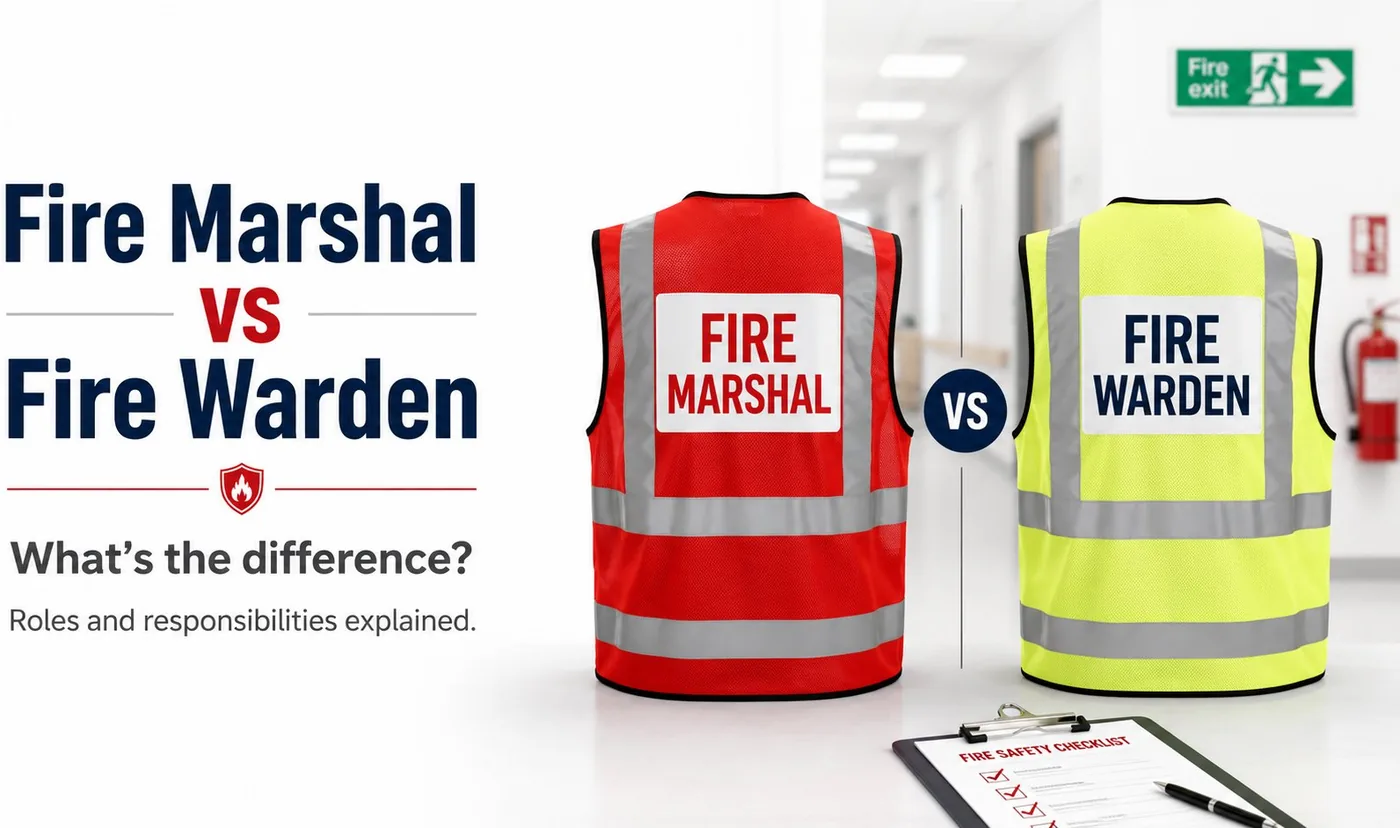
  • Red — used by some workplaces, particularly to mark senior fire marshals or chief fire wardens. Signals authority more strongly.

Some larger sites use a colour hierarchy — yellow for general fire wardens doing the sweep, red for senior marshals managing the assembly point. This works well at sites with twenty-plus marshals where role differentiation matters during an actual incident. In a smaller workplace, picking one colour and using it consistently is more important than which colour.

The print on the back should clearly say "Fire Marshal" or "Fire Warden" in large, contrasting letters. Black on yellow, black on orange, white on red — the standard contrast combinations work fine. Avoid printed slogans, logos or branding that obscure the role identification. The point of the vest is that someone looking at the back of it from twenty metres away can read the role.

Spelling note

The correct UK English spelling is fire marshal — one L. "Fire marshall" with two L's is a common error, and you'll find it on a depressing number of pre-printed vests. If you're ordering customised vests, double-check the artwork before approving the print run.

The full marshal kit

The hi-vis vest is the headline item but a fully-equipped marshal carries more than that. The exact kit depends on the workplace, but a sensible standard set includes:

  • The vest or jacket itself, EN ISO 20471 Class 2, with role clearly printed
  • A clipboard and pen for the roll call. A pencil works in cold weather where pens fail. The clipboard also serves as a hard surface to write on outdoors
  • A copy of the sweep route plan for the assigned area, ideally laminated so it survives wet weather
  • A list of who should be present — typically the latest signing-in book, in/out board, or printed employee/visitor list
  • A torch in workplaces where evacuation might happen in low light (after-hours, basements, areas where emergency lighting could be the only illumination)
  • A whistle, occasionally — for very large or noisy environments where voice direction won't carry
  • A two-way radio or messaging app on a phone, on multi-floor or multi-building sites where marshals need to communicate during an evacuation. Radios are more reliable when mobile networks fail under load

Some workplaces consolidate this into a "sweep pack" — a labelled bag or pouch kept at a designated location, ready to grab when the alarm sounds. This is particularly useful on shift-pattern sites where the marshal on duty isn't always the same person and the kit needs to be handed over reliably.

Where to store the kit

The kit needs to be where the marshal can get to it within seconds of the alarm sounding. That means:

  • Visible — not buried in a desk drawer or a locked cupboard
  • Near the marshal's typical workstation, or close to the fire panel if the procedure is for marshals to head there first
  • Signed location — particularly on multi-shift sites where the marshal on duty changes regularly. A clearly marked "Fire Marshal Kit" hook or shelf removes any guesswork
  • Backup location — a spare set somewhere else, in case the primary location is the area on fire

Fire safety arrangements that depend on someone remembering where they put a vest six months ago tend to break down at the worst moment. A fixed location, signed and consistent, is worth the small effort to set up.

Vest care, replacement and inspection

Hi-vis garments don't last forever. The fluorescent fabric fades, the reflective bands degrade, and frequent washing accelerates both. Manufacturers typically guarantee performance to the standard for a finite number of wash cycles — often around 25.

Replace the vest when:

  • The fluorescent colour has visibly faded compared to a new one
  • The reflective bands are cracked, peeling, or no longer reflect under torchlight
  • Print or badges are damaged enough to obscure the role identification
  • The garment has been damaged by chemicals, heat or tear

Inspect the kit at least monthly — typically as part of the marshal's regular fire safety checks. A vest that fails its inspection during a real evacuation is too late.

Other identification options

While vests are the dominant choice, some workplaces use alternatives where vests aren't practical:

  • Armbands — for environments where bulky garments aren't possible (laboratories, cleanrooms, food preparation areas where contamination matters)
  • Tabards — looser-fitting alternatives to vests, sometimes preferred over winter clothing
  • Hi-vis jackets — for outdoor or cold-environment workplaces
  • Lanyard-mounted ID cards — supplementary identification, never the primary identification, because they're too small to be visible across a crowded space
  • Hard hats with high-visibility coating — used on construction sites and some industrial settings where head protection is already required

Whatever the format, the principle is the same: at twenty metres, in a panic, under poor lighting, occupants need to spot the marshal in under two seconds.

Common questions

Is a high-visibility vest legally required for fire marshals?

Not by name. The Fire Safety Order requires "suitable and sufficient" arrangements, and identification of marshals is part of that. In practice, every fire safety auditor expects to see clear identification, and a Class 2 vest is the standard way to provide it.

Can fire marshals wear branded company hi-vis instead of a dedicated fire marshal vest?

It's better than nothing but not ideal. The role-specific print ("Fire Marshal" or "Fire Warden" in large letters across the back) is what makes the vest function during an evacuation. Generic company branding doesn't distinguish the marshal from any other staff member in hi-vis.

Does the colour matter legally?

No. Yellow, orange and red are conventions, not regulations. Pick one and use it consistently across all your marshals.

How many vests do we need?

At minimum one per fire marshal on duty plus spares for absence cover. Larger sites with shift patterns typically have a vest per marshal slot rather than per person, kept at a fixed handover location.

Should fire marshals wear their vest all the time?

No — that defeats the point. The vest is donned at the start of an evacuation, when the alarm sounds. Wearing it routinely means it has no signalling power when it actually matters.

---

For more on what fire marshals do once they're identified and out on the floor, see the fire marshal responsibilities page and the fire marshal checklist — the checklist in particular covers the sweep procedure where the kit gets used.

If you're equipping a workplace from scratch, our Fire Warden Training course covers equipment specification alongside the broader role. £18 per learner, RoSPA approved and CPD accredited, 60 to 90 minutes online, instant certificate on completion. Bulk discounts apply from 10 delegates upwards, with the deepest savings for larger sites training their whole marshal team in one go.

Looking for a fire warden certificate?

Get qualified fast with our RoSPA approved online training.

View Courses